Product links on this page go to Amazon. If you buy through them, Your First Paddle earns a commission. How we pick and earn
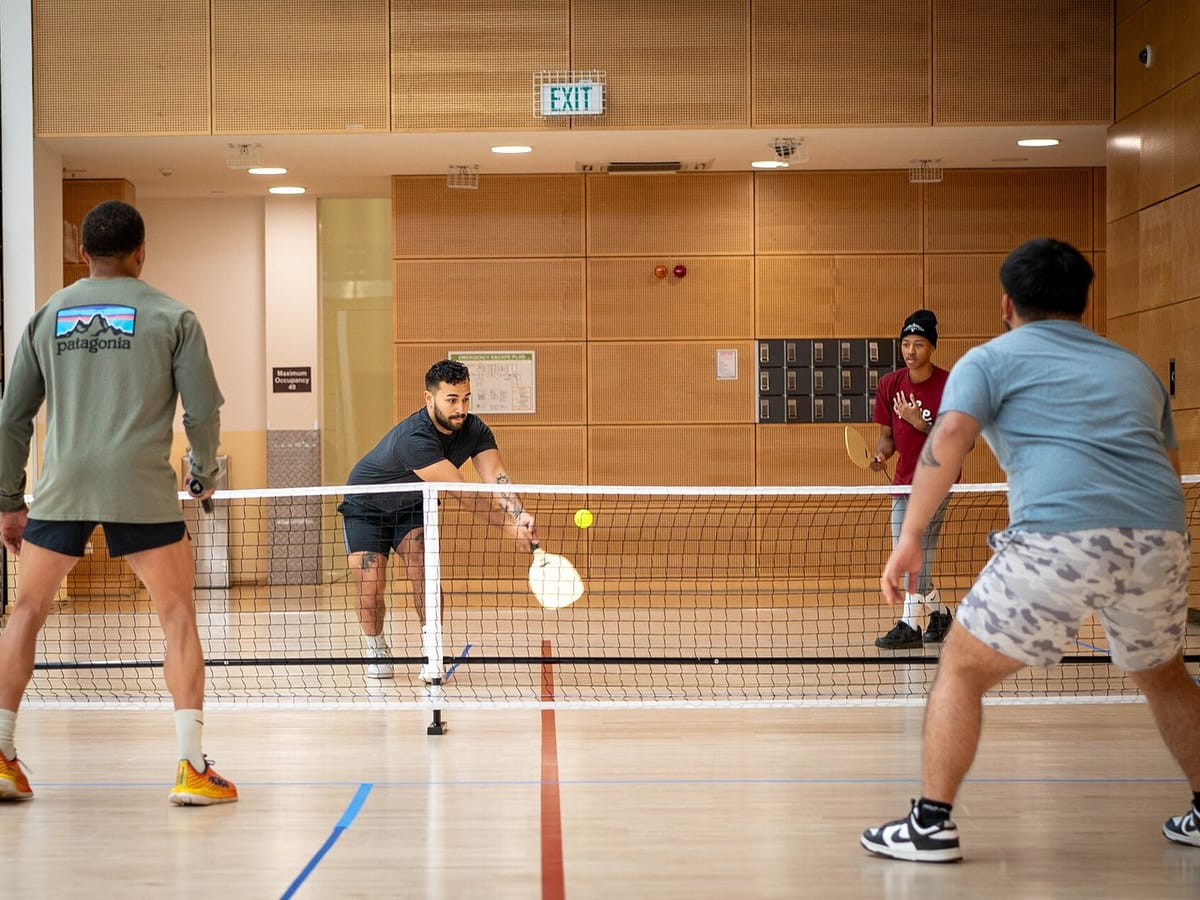
Look at the feet at any open-play session and half of them are in running shoes. It’s the one piece of beginner gear that gets people hurt, and the fix costs less than a paddle.
Running shoes go one way
A running shoe is built for one motion: landing on the heel or midfoot and rolling forward. So it has a tall, soft heel for cushioning, a narrow base, and a tread that grips front-to-back. The American Academy of Orthopaedic Surgeons describes court shoes, the kind for tennis, basketball and volleyball, as the opposite: a solid tread designed for stability in all directions.
Pickleball is a small court and a slow ball, which means almost no running and constant shuffling, lunging and pivoting. Push sideways on a tall soft heel and the shoe rolls, and the ankle goes with it.
What the injury data shows
Pickleball injuries treated in US emergency departments rose from about 1,300 in 2014 to about 24,500 in 2023, according to a 2026 study in Sports Health using the national injury surveillance system. Most were in players aged 60 to 79; men had higher odds of lower-extremity injuries and sprains and strains, women more falls and wrist fractures. A separate 2026 study of racket and paddle sports in the American Journal of Emergency Medicine found falls were the most common mechanism, at about a third of injuries, and sprains and strains the most common diagnosis.
Shoes don’t cause all of that. But a lower-leg sprain from a rolled ankle, and a fall from a shoe that slid or caught, are the two injuries a court sole is built to prevent, and the AAOS’s advice for tennis is the same for pickleball: wear tennis shoes with good support to prevent ankle injuries.
What a court shoe does
- A flat, wide sole that stays under you on a sideways push.
- A low, firm heel that doesn’t roll.
- A tread that grips in every direction, usually herringbone.
- A reinforced toe and side for the drag of a lunge.
- Durable rubber for concrete, or soft gum rubber for a gym.
Outdoor court shoe, wide sizes
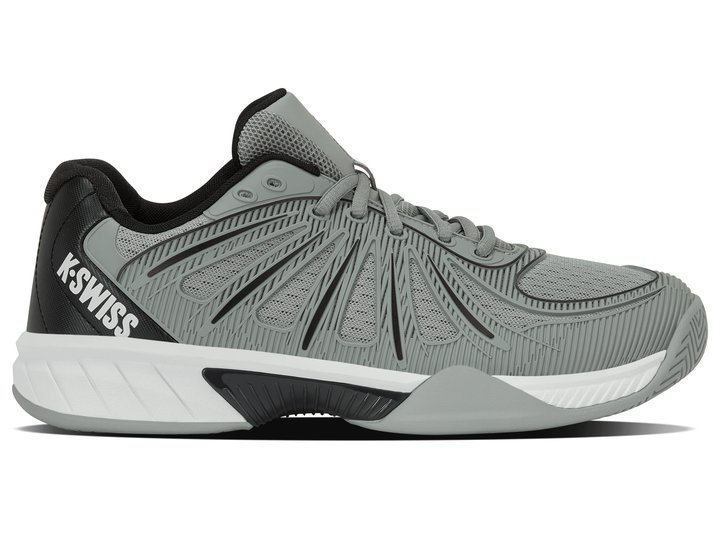
K-Swiss Express Light Pickleball
K-Swiss Express Light Pickleball
A light outdoor court shoe made for the sport, with a rubber outsole, a plantar support chassis for sideways movement, and medium and wide widths.
- Court
- Outdoor (hard court)
- Outsole
- Aosta rubber, DragGuard
- Midsole
- K-EVA
- Widths
- Medium, 2E wide
- Women's
- ASIN B07V3G6R1F
Suits: The default first court shoe, especially for wide feet. Men's listing; the women's is B07V3G6R1F.
Weigh: K-Swiss sells a separate "Express Light Indoor"; this one is the outdoor-court version, fine on gym floors too but the sole wears faster outside.
Indoor and outdoor soles
Outdoor court shoes use a hard rubber that lasts on asphalt and concrete. Indoor court shoes, which includes most volleyball shoes and ASICS’ Gel-Renma 2, use softer gum rubber that grips a wood floor and wears through in weeks outside. If you play both, buy the outdoor shoe; it grips a gym floor well enough.
What to wear instead
- A pickleball or tennis court shoe. The shoe page has five, in widths from standard to extra wide.
- Hard-court tennis shoes you already own. Same job.
- Volleyball or basketball shoes for indoor play.
- Not running shoes, walking shoes, trail shoes or cross-trainers with a tall heel.
Court shoe, Goodyear outsole, extra wide
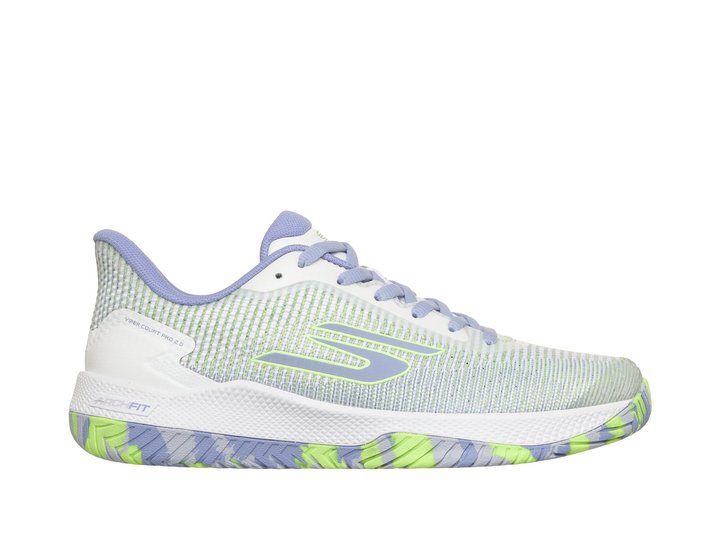
Skechers Viper Court Pro 2.0
Skechers Viper Court Pro 2.0
Skechers' pickleball shoe: an Arch Fit insole, a cushioned midsole and a Goodyear rubber outsole made for the stops and starts of the sport, in extra-wide for men.
- Court
- Outdoor and indoor
- Outsole
- Goodyear rubber
- Midsole
- ULTRA GO foam, Arch Fit insole
- Widths
- Men medium, extra wide; women medium, wide
- Women's
- ASIN B0DDW445GD
Suits: Players who want more cushion than a tennis shoe, and very wide feet. Men's listing; the women's is B0DDW445GD.
Weigh: The cushioning that feels good standing around gives up a little stability in a hard sideways push.
Fit
Buy in the afternoon in your playing socks, with a thumb’s width at the toe. Replace when the sole is smooth under the ball of the foot. And tie them properly: a loose court shoe is a running shoe.
Paddle and balls sorted? See what you need to start.