Product links on this page go to Amazon. If you buy through them, Your First Paddle earns a commission. How we pick and earn
Pickleball is cheap to start. A paddle, a few balls and shoes that grip sideways, and you can play for years. The trouble is that the first search for “pickleball paddle” returns a wall of top-tier carbon fiber, and the first search for “pickleball balls” returns two kinds that look the same and aren’t. Here’s the whole shopping list, short.
First: play once without buying anything
Nearly every open-play session has loaner paddles, and nearly every player there will lend you one for a game. Go once. You’ll find out:
- whether your local courts are outdoor (hard 40-hole ball) or indoor (soft 26-hole ball), which decides what balls to buy;
- whether you like the game, which decides how much to spend on a paddle;
- what grip size feels right, after trying two or three paddles.
How open play works walks through the session itself.
The three things to buy
1. A paddle
Any approved paddle between 7.5 and 8.3 ounces with a grip that fits your hand. For most adults that’s a 4.25-inch grip; for small hands, 4 to 4.125. Face material matters less than the ads say: graphite, fiberglass and carbon fiber all work for a beginner. The paddle page compares nine, from a cheap approved graphite paddle to one you won’t outgrow, and choosing your first paddle explains the numbers.
Mid-range fiberglass
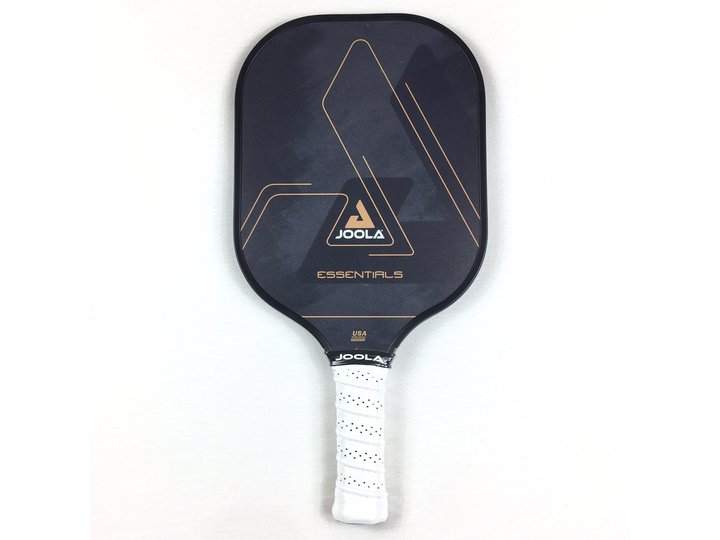
JOOLA Essentials
JOOLA Essentials
JOOLA's entry paddle: a fiberglass face over a polypropylene honeycomb core, approved for tournaments, from the brand most of the pros play.
- Weight
- 8.2 oz
- Handle
- 4.75 in
- Size
- 15.5 × 7.9 in
- Face
- Fiberglass
- Core
- Polypropylene honeycomb
- USA Pickleball
- Approved
Suits: A first paddle with a little more pop than the graphite budget paddles, for someone who likes to hit.
Weigh: An Amazon-only line, so the specs come from JOOLA's listing, not a spec sheet. 180-day warranty.
2. Balls that match the court
Outdoor balls are harder with 40 small holes; indoor balls are softer with 26 big ones. An outdoor ball in a gym skids and bounces high; an indoor ball outdoors floats and dies. Buy a dozen of whichever your courts use. If you don’t know yet, buy outdoor: most public courts are. Indoor vs outdoor balls has the rules and the differences.
Outdoor ball, the tournament standard
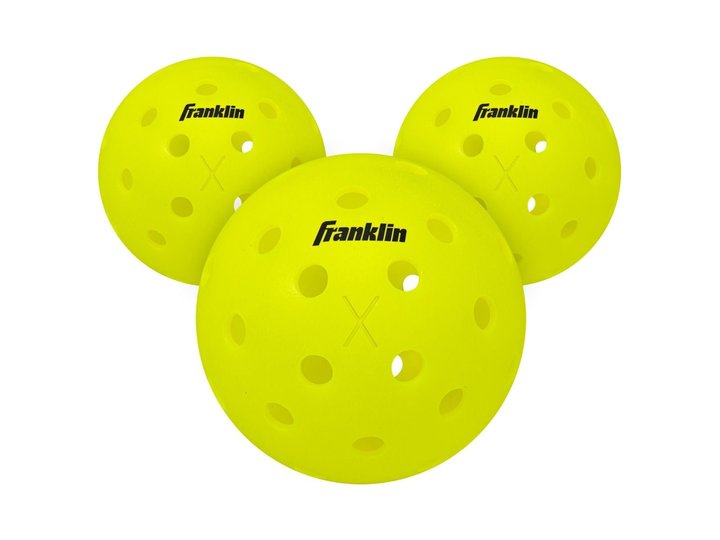
Franklin X-40 outdoor balls
Franklin X-40 Outdoor
The ball most tournaments and most open-play sessions use: 40 machine-drilled holes, on USA Pickleball's approved list, sold in packs from 3 to 100.
- Use
- Outdoor
- Holes
- 40
- Colors
- Optic yellow, plus lava, ember, purple, blue, green
- Packs
- 3, 6, 12, 36, 100
- USA Pickleball
- Approved
Suits: Anyone playing outdoors. If you buy one kind of ball, buy this one.
Weigh: Like every hard outdoor ball it cracks in cold weather and after a few weeks of hard play. Franklin's own page is unreachable, so the hole count is from its listing.
3. Court shoes
Running shoes are the most common beginner injury waiting to happen. They’re built for going forward, with a tall soft heel that rolls when you push sideways, and pickleball is nothing but pushing sideways. A court shoe, or a hard-court tennis shoe you already own, has a flat wide sole that grips in every direction. Why running shoes are wrong has the emergency-room numbers; the shoe page has five pairs.
Outdoor court shoe, wide sizes
K-Swiss Express Light Pickleball
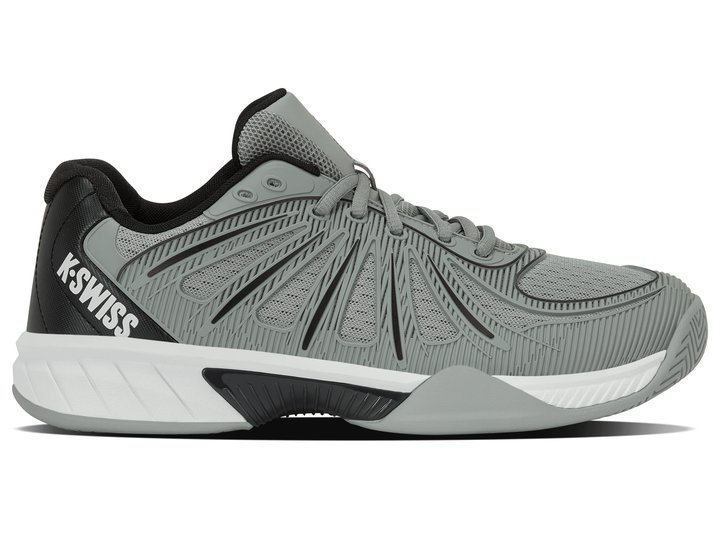
K-Swiss Express Light Pickleball
A light outdoor court shoe made for the sport, with a rubber outsole, a plantar support chassis for sideways movement, and medium and wide widths.
- Court
- Outdoor (hard court)
- Outsole
- Aosta rubber, DragGuard
- Midsole
- K-EVA
- Widths
- Medium, 2E wide
- Women's
- ASIN B07V3G6R1F
Suits: The default first court shoe, especially for wide feet. Men's listing; the women's is B07V3G6R1F.
Weigh: K-Swiss sells a separate "Express Light Indoor"; this one is the outdoor-court version, fine on gym floors too but the sole wears faster outside.
What to bring to the first session
- The paddle, in your hand or a bag.
- Two or three balls, so you aren’t always using someone else’s.
- Water. Games are short but you’ll play six of them.
- A hat and sunglasses outdoors; the courts face every direction and the ball is small.
- Patience with the score. Everyone forgets it; call it out loud anyway.
What can wait
An overgrip when the handle gets slick or feels thin. A bag when you have two paddles. A portable net only if there’s no court within a reasonable drive. A second, better paddle after a few months, when you know whether you want power or control. All of it is on the gear page, and the starter kit puts the whole list on one page.