Product links on this page go to Amazon. If you buy through them, Your First Paddle earns a commission. How we pick and earn
A pickleball paddle has four numbers that matter and a lot of marketing that doesn’t. Here are the four, what each one changes, and how to pick a first paddle you’ll still like in a year.
What the rules allow
USA Pickleball’s equipment standards are simple: a paddle’s length plus width can’t exceed 24 inches, the length can’t exceed 17 inches, and there’s no limit on weight or thickness. Within that, makers do what they like. “Approved” means the paddle is on USA Pickleball’s list, which sanctioned tournaments check and nobody at the park does. Every paddle on our paddle page is approved, because at this price level it costs nothing extra and it means the paddle is a known quantity.
Weight: 7.3 to 8.5 ounces
Most adult paddles weigh between 7.5 and 8.3 ounces. Lighter is quicker at the net, easier on the elbow and shoulder, and gives up a little power. Heavier drives the ball with less effort and gets tiring over a long session.
For a first paddle, 7.8 to 8.2 ounces is the range to stay in. Go lighter if you have a sore elbow or shoulder; the Paddletek Bantam TS-5 is about 7.25 ounces for exactly that reason.
Grip size: 4 to 4.5 inches
The grip size is the circumference of the handle. A grip that’s too thick tires the forearm and makes wrist action hard; one that’s too thin twists in the hand on off-center hits.
Measure from the middle crease of your palm to the tip of your ring finger. That length in inches is close to your grip size: 4 inches for most women and small-handed men, 4.25 for most men, 4.5 for large hands. Between sizes, go smaller: an overgrip adds about an eighth of an inch and you can always add one, never remove handle. The JOOLA Journey and the ONIX Z5 have 4-inch grips; the Vatic Pro Prism Flash is 4.125.
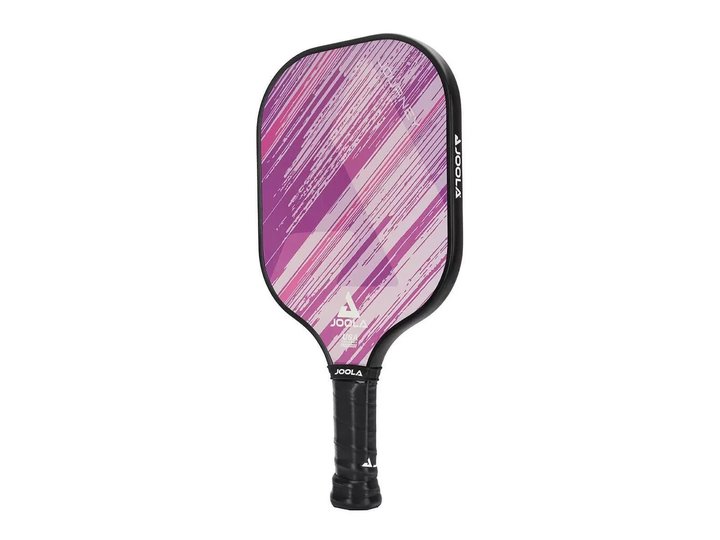
Mid-range, light, small grip
JOOLA Journey 10 mm
JOOLA Journey 10mm
A light 7.8-ounce paddle with a 4-inch grip and a thin 10 mm core, which JOOLA aims at beginners and at adults and kids sharing gear.
- Weight
- 7.8 oz
- Grip
- 4 in
- Size
- 15.8 × 7.8 in
- Face
- Fiberglass / graphite
- Core
- Polymer honeycomb, 10 mm
- USA Pickleball
- Approved
Suits: Smaller hands, teens, and anyone who found a standard paddle tiring to swing.
Weigh: A thin core means more pop and less control than a 16 mm paddle; fine for learning, less so once you start dinking. Amazon-only line, 180-day warranty.
Face: graphite, fiberglass or carbon fiber
The face is the hitting surface, over a honeycomb core.
- Fiberglass is the most flexible, so it has the most pop. Good for a beginner who likes to hit; a bit less control at the net.
- Graphite is stiffer and lighter, with more control and a touch less power. Most budget paddles are graphite.
- Carbon fiber, especially raw (unpainted) carbon, is stiff with a textured surface that grips the ball for spin. It’s what the top-tier paddles use and what the better mid-range paddles now use.
For a first paddle any of the three works. Spin is a skill you won’t have for a few months, and by then you’ll know what you want.
Core thickness: 10 to 16 mm
The core is a polymer honeycomb, and its thickness changes the feel more than the face does. A thick 16 mm core is softer, quieter and more forgiving: the ball sits on the paddle a moment longer and goes where you aimed. A thin 10 to 13 mm core is livelier: more power, less control, more punishment for a mis-hit.
Most coaches put beginners on 14 to 16 mm. The Franklin Signature Pro 16, Selkirk SLK Evo Control Max and Vatic Pro Prism Flash are all 16 mm. Thin-core paddles like the JOOLA Journey suit small-handed or younger players who want the lighter swing.
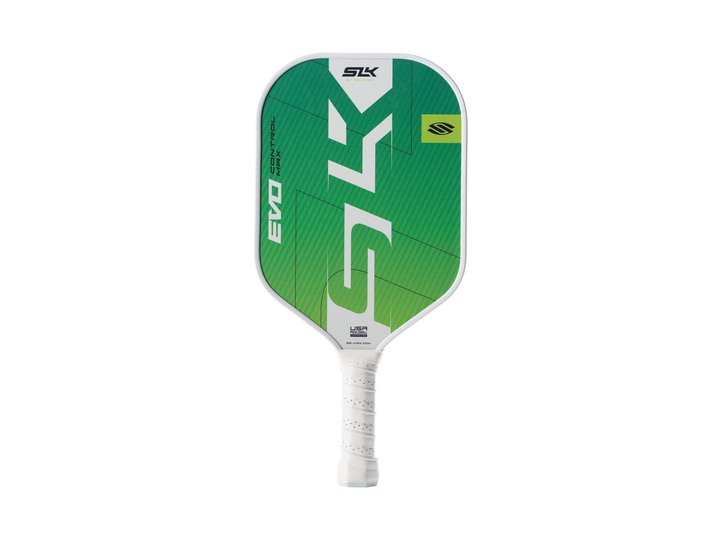
Carbon fiber, beginner to intermediate
Selkirk SLK Evo Control Max
Selkirk SLK Evo Control Max
A real carbon fiber face (Toray T700) over a 16 mm polymer core, from Selkirk's SLK line, which exists to put the brand's construction in a beginner's hands.
- Weight
- 7.6–8.1 oz
- Grip
- 4.25 in, 4.85 in handle
- Size
- 16 × 7.85 in
- Face
- T700 carbon fiber
- Core
- Polymer honeycomb, 16 mm
- USA Pickleball
- Approved
Suits: Someone who knows they will keep playing and wants a paddle that will not need replacing in six months.
Weigh: The same listing sells the XL version with a longer handle; make sure the cart says Max. One-year warranty.
The two mistakes
Buying the expensive paddle first. You’ll play for three months before you can tell a raw carbon face from a painted one, and your preferences will change. A budget or mid-range approved paddle is the right first purchase; the expensive one is the second.
Buying the grip too big. The paddle feels solid in the store and the forearm aches after an hour. Measure, go smaller, add an overgrip.
Which one
- Cheap and approved: niupipo Explorer Pro.
- The safe middle: JOOLA Essentials.
- Small hands: JOOLA Journey 10 mm.
- You know you’re staying: Selkirk SLK Evo Control Max, or the Vatic Pro Prism Flash if you want raw carbon.
Then: the balls your court uses and shoes that grip sideways. What you need to start has the full list.