You can learn pickleball’s rules in the time it takes to walk to the court. Here they are, in the order they’ll come up in your first game. Everything below is from USA Pickleball’s official rulebook, which is the one used in the US.
The court
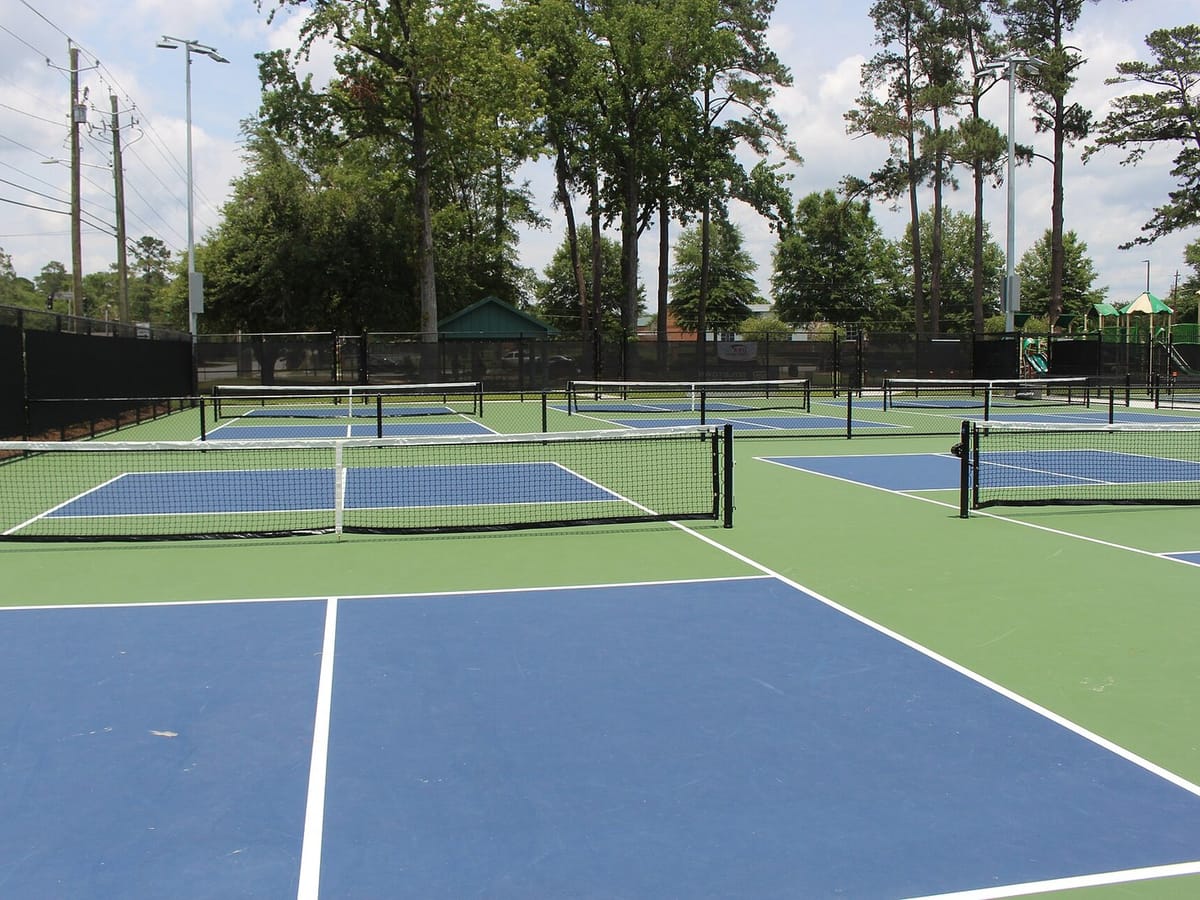
A pickleball court is 20 feet wide and 44 feet long, the same size for singles and doubles, which is why doubles is the default: four people fit a small court well. The net is 36 inches high at the sidelines and 34 inches at the center.
The 7-foot zone on each side of the net is the non-volley zone, which everyone calls the kitchen. It’s the rule that makes pickleball pickleball, and it’s covered below.
The serve
- Serve underhand, with the paddle moving upward and contact below your waist. A drop serve, where you drop the ball and hit it after it bounces, is also legal and easier for beginners.
- Stand behind the baseline and serve diagonally, into the service box across the net. The serve must clear the kitchen, including the kitchen line.
- You get one serve. A fault means the serve passes to your partner, or to the other team.
The two-bounce rule
After the serve, the ball must bounce once on each side before anyone can hit it out of the air:
- The receiving team lets the serve bounce.
- The serving team lets the return bounce.
After those two bounces, anyone can volley, except from inside the kitchen. This rule stops the serving team from rushing the net, and it’s what gives beginners a chance to rally.
The kitchen
You can’t hit a volley, which means hitting the ball before it bounces, while standing in the kitchen or touching its line. Your momentum counts too: if a volley carries you into the kitchen afterward, it’s a fault.
You can stand in the kitchen whenever you want, and you can hit a ball there after it bounces. Most beginners think the kitchen is off-limits; it isn’t. The rule is only about volleys.
Scoring
- Only the serving team can score. Games go to 11, and you have to win by 2.
- In doubles, both players on a team serve before the serve passes to the other side, except at the start of a game, when the first team gets only one server. That’s why the first score called is 0-0-2: your score, their score, and which server is up.
- The server calls the score before serving. When the serving team wins a point, the server switches sides with their partner and serves again from the other box. When they lose a rally, the serve passes to the partner, then to the other team.
Say the score out loud every time. It feels awkward for two games and then it’s automatic.
Faults, in one list
A rally ends when the ball is hit out of bounds, into the net, before it bounces when it should have, or is volleyed from the kitchen; when it bounces twice; or when a player touches the net. Lines are in, except that a serve landing on the kitchen line is out.
What to have in your head for the first game
Serve underhand and cross-court. Let the serve and the return bounce. Stay out of the kitchen unless the ball bounces. Call the score. That’s a game.
When you’re ready for the social side, read how open play works.